
The Anatomy of a Failed Diagnosis
The window is leaking. Or at least, that is what the homeowner thinks when they see a pool of water on the cherry wood sill in the dead of winter. A national call center agent, sitting in a climate-controlled office two thousand miles away, looks at a script. They see ‘water’ and ‘window’ and immediately trigger a warranty claim for a frame failure. But a local expert, someone who understands the specific atmospheric pressures of our region, knows better. I remember a call from a homeowner in a panic because their new high-performance windows were ‘sweating’ so badly that mold was forming on the casing. I walked into the house, didn’t even look at the windows first, and pulled out my hygrometer. The indoor humidity was 60 percent while it was 5 degrees outside. I had to explain that the windows weren’t failing; they were actually performing too well. They were so airtight that the house couldn’t breathe, and the moisture from their daily lives was hitting the glass the coldest surface in the room and reaching the dew point. That is the difference between a support ticket and a solution. Local experts understand the nuances of the regional climate that a remote technician simply cannot grasp. When you invest in local services, you are buying more than a product; you are buying an insurance policy against physics.
“Installation is just as critical as the window performance itself. A high-performance window installed poorly will fail.” AAMA Installation Masters Guide
The Physics of the Rough Opening
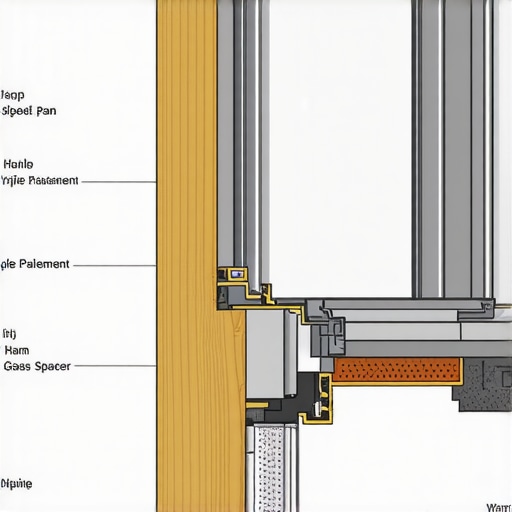
A window is not a static object. It is a dynamic component of the building envelope that must manage movement. When we prep a Rough Opening, we are looking for more than just a square hole. We are looking for the structural integrity of the header and the plumbness of the jacks. In our region, where the temperature can swing fifty degrees in a single week, the expansion and contraction cycles are brutal. This is where local experts shine. We know that a vinyl frame will expand at a different rate than the wood framing of the house. If you don’t leave the proper gap for a Shim and high-quality backer rod, that frame is going to bow. A bowed frame means the weatherstripping doesn’t meet the Sash correctly, and suddenly you have an air leak that no amount of caulk can fix. We see this often with ‘volume vendors’ who use a one-size-fits-all approach. They jam a window into an opening, shoot some cheap canned foam around it, and call it a day. Within two seasons, the homeowner is calling for support because the window is difficult to operate. The reality is that the Rough Opening was never properly prepped with a Sill Pan to manage incidental moisture.
The Shingle Principle and Water Management
Water is patient. It will find the path of least resistance every single time. The fundamental law of glazing is the ‘Shingle Principle’: every layer of the flashing tape and building wrap must lap over the layer below it. I have performed countless installation autopsies where the flashing tape was applied over the top of the window flange instead of under the weather-resistive barrier at the head. This creates a reverse lap. Water runs down the siding, gets behind the trim, and is directed straight into the wall cavity instead of being shed to the exterior. A regional support center understands the specific rainfall and wind-load patterns of our area. They know that in our climate, we need a Drip Cap that extends at least a half-inch beyond the window frame to ensure water clears the Rough Opening entirely. These are the guaranteed details that national installers often overlook because they are chasing volume over velocity. When we talk about services, we are talking about a comprehensive water management strategy that includes Weep Holes that are actually kept clear during the siding phase, and a Sill Pan that is sloped to the exterior.
Thermal Dynamics: Why U-Factor Is Your Best Friend
In our northern climate, the enemy is heat loss and the resulting condensation. We are not just fighting the cold; we are fighting the laws of thermodynamics. Heat moves toward cold. A single pane of glass has an R-value of about 1. That is essentially a hole in your insulation. To combat this, we utilize Insulated Glass Units (IGUs) with Low-E coatings. But not all Low-E is created equal. For our region, we prioritize the U-Factor, which measures the rate of non-solar heat loss. The lower the U-Factor, the better the window is at keeping your expensive furnace-heated air inside. We typically recommend a Low-E coating on Surface #3. This allows the solar heat gain to enter the home during the day but reflects the long-wave infrared heat back into the room at night. Local experts will also insist on warm-edge spacers. Older windows used aluminum spacers between the panes of glass, which acted as a thermal bridge, conducting cold directly to the edge of the glass. This is exactly where condensation starts. Modern composite spacers drastically reduce this thermal transfer, keeping the edge of the glass warmer and significantly lowering the risk of frost buildup on the interior Glazing Bead.
“The National Fenestration Rating Council (NFRC) provides the only reliable way to compare the energy performance of windows, doors, and skylights.” NFRC Homeowner Guide
The Myth of the Lifetime Guarantee
Every window comes with a sticker that says ‘Lifetime Warranty,’ but you have to read the fine print. Most of those warranties only cover the components, not the labor to replace them. And more importantly, they don’t cover failures caused by improper installation. This is why local experts provide a secondary layer of protection. When a local company provides guaranteed services, they are backing up the installation work. If a Sash starts to bind because the house settled or the Shim shifted, a regional team can be there in days, not weeks. They aren’t waiting for a corporate auditor to fly in from Chicago to verify a claim. They know the house, they know the neighborhood, and they know how the local soil affects foundation movement. This level of support is the difference between a window that lasts thirty years and one that needs a ‘caulk-and-walk’ repair every spring. We focus on the structural integrity of the Rough Opening and the long-term durability of the Sill Pan to ensure that the window remains Operable for the life of the home. Local experts don’t just sell windows; they manage the hole in your wall. This ensures that the building envelope remains intact, your energy bills stay low, and your home stays dry. When you choose a regional support center, you are choosing a partner who lives in the same weather you do.